 Russia
 Belarus
 Georgia
 Kazakhstan
 Kyrgyzstan
 Uzbekistan
 China
China Nepal
Nepal Bangladesh
 Poland
 Romania
 Slovakia
 Hungary
 N. Macedonia
 Vietnam
 Canada
 Armenia
 UK
UK Australia
 USA
USA Ireland
 Germany
 New Zealand
 Italy
Italy France
 Singapore
 Netherlands
 Sweden
 Switzerland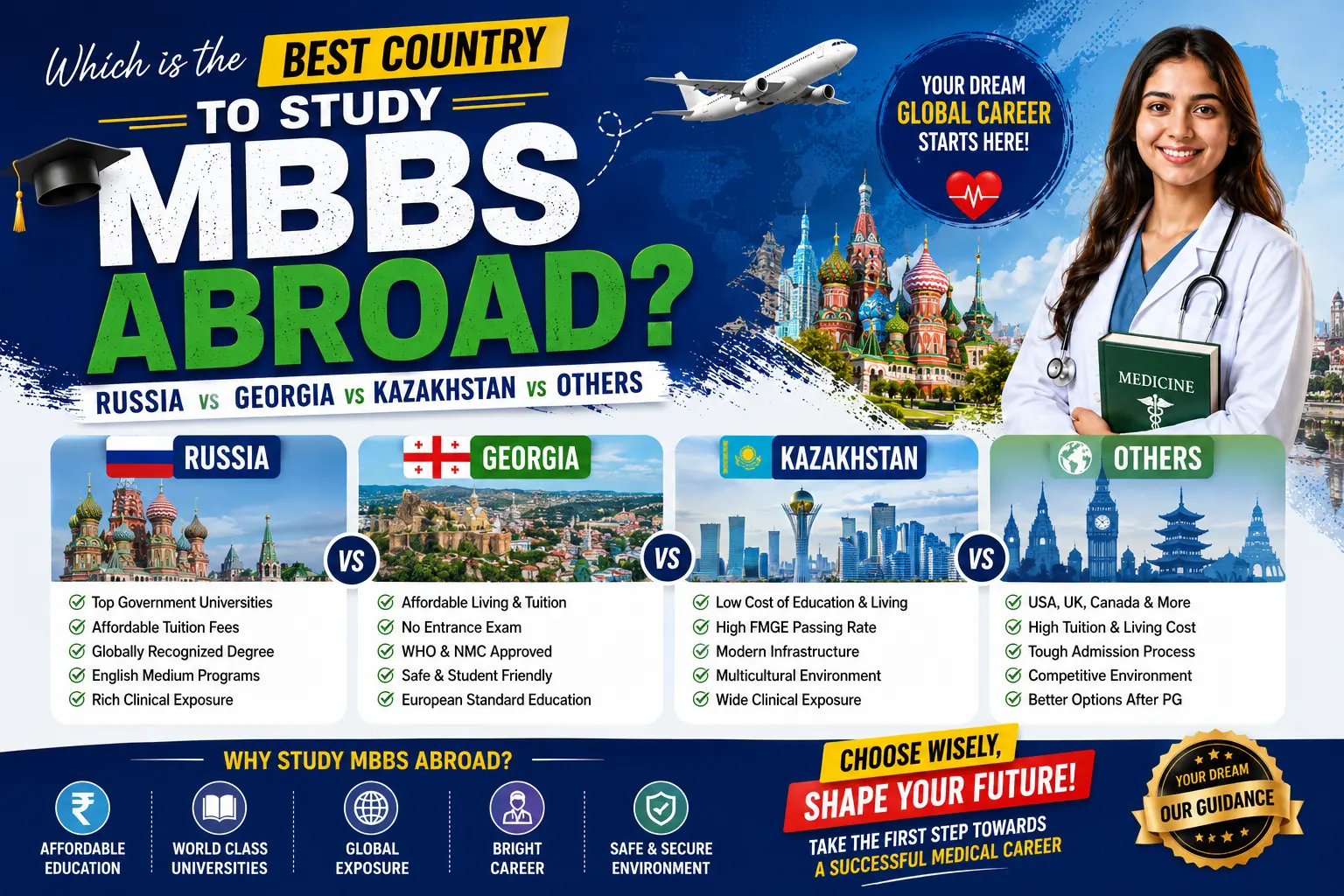
An MBBS degree from an international university is in demand in India, especially for students who are unable to secure admission in an Indian medical college due to limited availability and high costs. Many Indian students are turning to overseas education as an option. Both WDOMS and MBBS Advisor can be helpful resources for understanding NMC and WHO standards, registrations, and country-specific features.
This guide provides a detailed analysis for Russia, Georgia, Kazakhstan, and alternative countries. Eligibility, costs, quality of education, safety, available clinical exposure, and post-graduation activities have been outlined to assist in identifying opportunities that best fit your education and career goals.
NMC, NEET, and WDOMS: What You Need to Know for MBBS
Regulatory requirements should be the first consideration prior to country selection. Indian students wishing to study MBBS abroad must qualify the NEET exam and are required to adhere to the National Medical Commission (NMC) guidelines to be able to practice medicine in India. The guidelines state that the medical degree must be from a WDOMS listed university and they must complete an English medium course of not less than 54 months plus a 12-month internship at the same university.
The first step to studying MBBS abroad is qualifying the NEET exam. The MBBS Advisor website has the latest news and updates related to the NEET exam. Also, check the NMC and WHO lists to confirm that institutes in the country of your choice are recognized. The WDOMS must also be consulted to avoid issues with licensing exams (FMGE/NExT) upon return to India.
This framework balances global standards and safeguards students from low-quality schools. Effective measures from MBBS Advisor will help you apply strategically and anticipate results based on your NEET rank.
What are the benefits of Indian students studying MBBS abroad?
Students with average NEET scores have more opportunities studying MBBS abroad than in India. Many countries offer affordable and good quality education with modern facilities and ample clinical exposure, as well as English-language education. The costs abroad are often far cheaper than the private institutes in India, where students have to pay donation and capitation fees.
Studying MBBS abroad also gives students the opportunity to improve their cultural and linguistic education and to extend their social network. This education will benefit their future postgraduate studies and their future medical practice. The post-graduate opportunities depend on students selecting a quality, internationally recognized education that will prepare them for return licensing examinations.
Further, climate, safety, cost of living, and community will be important deciding factors. Russia, Georgia, and Kazakhstan offer the best balance of quality and affordable education, although Kyrgyzstan, Uzbekistan, and other European countries have MBBS options as well.
Why is MBBS in Russia a good choice?
India students studying MBBS abroad continue to choose Russia as the leader in preferred countries. Russia has a rich tradition of high-quality education that is reinforced by government support and has more than 70 NMC approved universities.
The typical duration for the medical course with an internship is 6 years, which is satisfactory with the NMC. The tuition costs range from ?2.5 to ?6 lakhs per year, amounting to ?22-35 lakhs which is comparatively less compared to Indian private colleges. The cost of living is ?10,000-20,000 per month depending on the city.
Established universities like Sechenov University, Kazan State Medical University etc. have very good instructor-pupil ratios, advanced infrastructures, and provide medical programs in English, though a little knowledge of the Russian language will assist in handling patients during the clinical years. Clinical teaching is further advanced owing to the large patient population and a developed medical care system.
It is quite secure for all International medical aspirants with dedicated hostels and support systems. The FMGE passing rate is fairly decent and is rooted in formative education and clinical foundations and training.
Advantages
- Low costs
- Recognized globally by the NMC, WHO and ECFMG
- Practical training
- Excellent return on investment
Disadvantages
- Cold weather
- Possible language issues
For many of the students consulting with MBBS Advisor, Russia remains in the top tier for countries providing practical training with excellent return on investment.
Georgia: The New Hotspot for Studying Medicine in Europe
The 6 year English medium medical programs cost 3.5-6 lakhs each year which comes to 22-45 lakhs for the entire course including other living expenses. Monthly living expenses are around 25,000-35,000. The hostels are comfortable and the universities take a modern approach to teaching, with more focus on practicals. While practicing medicine, the understanding and recognition from the NMC, WHO, and WDOMS give doctors confidence and ensure a solid practice. Georgia is a safe country for women and those concerned about safety. Georgia is culturally close to India and has Indian food. This is good for adjusting to the country. Modern hospitals ensure good clinical training. Information about training and exposure should be carefully reviewed as it varies from university to university.
Advantages
- No hidden costs
- Better FMGE outcome
Disadvantages
- No dedicated NExT training
- Overall cost slightly higher than Russia
Georgia may be a good option for students looking to balance an excellent education with a decent quality of life. For more information on universities in Georgia, refer to MBBS Advisor on NEET.
Kazakhstan Medical Education on a Budget
Kazakhstan is another low cost country providing quality medical education. There is no compromise on medical education with hospitals offering modern training.
Kazakhstan has a 6 year English medium program in medical universities such as Al-Farabi Kazakh National University and Semey Medical University. Both are NMC/WHO recognized and annual tuition is in the range of 3-5 lakhs. Living costs are around 15,000-25,000 monthly with total cost for the course coming to 25-38 lakhs.
Medical education in Kazakhstan has an edge because of the rapid infrastructure development along with improved clinical exposure due to a changing patient demographic. The weather is cold like Russia, but there are good support systems for international students.
Pros
- Inexpensive
- Recognized
- Simple admissions
Cons
- Inconsistent FMGE results by university
- Cultural adjustment
Based on predictors, MBBS Advisor recommends Kazakhstan for cost-sensitive students with average NEET scores.
Russia, Georgia, Kazakhstan: A Comparison
In the Russia, Georgia, Kazakhstan comparison, take multiple factors into account.
Costs
Russia and Kazakhstan are more affordable, but Georgia has better facilities. Choose the right universities to meet the NMC’s 54-month + internship regulations.
Education Quality
NMC/WDOMS recognized universities in all three countries. Russia and Georgia have the edge with a more favorable Global Ranking and better licensing prep. Clinical hours are sufficient and are determined by the hospitals that the universities are linked to.
Lifestyle and Safety
Georgia is the clear leader in safety and living conditions. Russia and Kazakhstan have a harsher climate, but there are large Indian communities.
FMGE/NExT Success
Independent of university selection, Georgia has been on an FMGE positive trend, and Russia has more rigorous training.
Considerations
- Visa processes
- English and local languages are sufficient for daily life
- Check the NEET resources and rank predictors on MBBS Advisor to refine your options based on your score
Top country options depend on priorities. Comfort and safety might steer you to Georgia, but more practical exposure will probably favor Russia.
Other Popular Destinations for MBBS Abroad
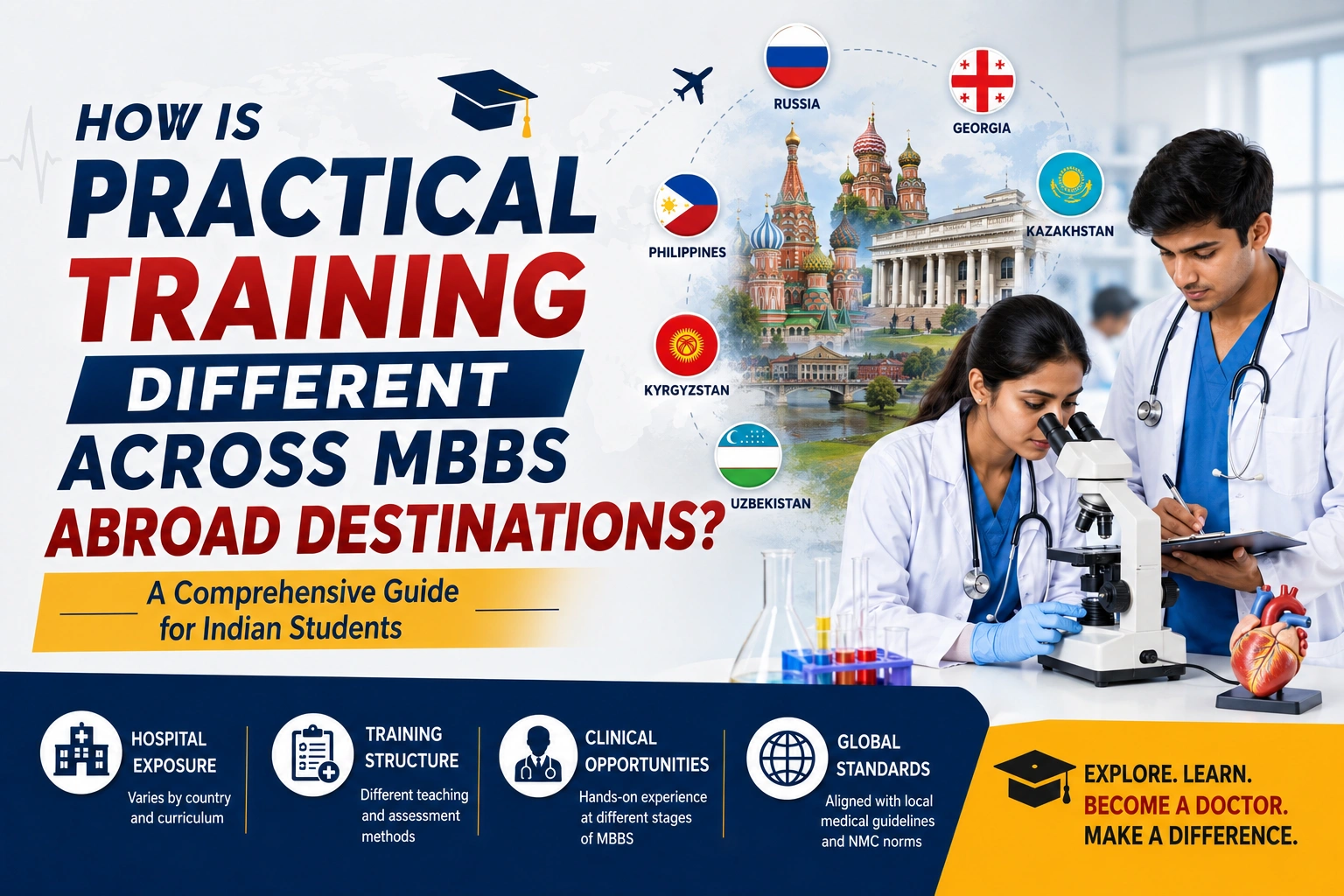
Beyond Russia, Georgia, and Kazakhstan, some countries like Kyrgyzstan, Uzbekistan, and the Philippines, along with some European countries, are worth considering. In terms of affordability, recognition and with a strong Indian community, Kyrgyzstan is comparable with Kazakhstan. Uzbekistan is becoming popular since it has modern healthcare systems at much cheaper operational rates.
The Philippines has a system of Education similar to the USA, and offers studies in the English language. However, the cost of living is comparatively higher. In Hungary and Poland, higher fees guarantee higher quality education. Ensure that the universities you are looking at are NMC compliant and are listed with WDOMS.
To counter Russia, Georgia and Kazakhstan, MBBS Advisor also offers tools and counseling to help you compare these countries.
Admission Process, Eligibility and Preparation
The eligibility criteria for all is 50% in PCB with the lower end eligibility of 40% (for SC/ST/OBC candidates), aged at least 17 years on or before 31st December of the year of admission, and NEET qualified. The application window is usually between May and August.
Documents Required
- Mark sheets
- Passport copies
- NEET score cards
- Medical Fitness certificates
Choose a university (through MBBS Advisor), submit the application, get an offer letter, apply for a visa, and leave. The first step to studying abroad is to gain proficiency in English, but you should also learn about the country you are going to and how to manage your finances. After you arrive, the most important thing is to study and master your skills.
Use NEET rank predictor’s to look at how competitive you are and look for study loans and scholarships.
Career Prospects After MBBS Abroad
The other option is to return to India and take the NExT/FMGE to practice, or take your PG degree in India. However, most people do their PG from the country they studied in, or the USA (after the USMLE), the UK, or from other countries because these degrees are internationally recognized. Having a degree from Russia or Georgia is a huge advantage if you want to practice medicine in Europe. The other option is to do research or open a practice.
Licensing exams are a test of endurance, but students from the best universities tend to pass with the greatest ease.
Making the Right Choice: Tailored Advice
Identifying the best country is a matter of testing yourself.
- Budgets of 30 lakhs or under? Look at Russia or Kazakhstan.
- Safety and a modern atmosphere are priorities? Georgia is your best option.
- For more options, look at MBBS Advisor.
Check their site for more options.
If possible, check the campus, speak to alumni, and check the NMC/WDOMS listing yourself. Unverified agents are a hard pass, stick to the honest ones.
Conclusion: Your Pursuit of a Fruitful Medical Career
Each of the listed countries (and others) have preferences for students aspiring to become a doctor. Russia is the best for depth and affordability, Georgia for quality of life and standards, Kazakhstan for the best return on investment. When research is done properly, education is world class when following NMC guidelines, NEET, WDOMS, and MBBS Advisor.
The most important step is to assess your NEET score. The venture is long and arduous, but is valuable for both personal growth and the medical profession.