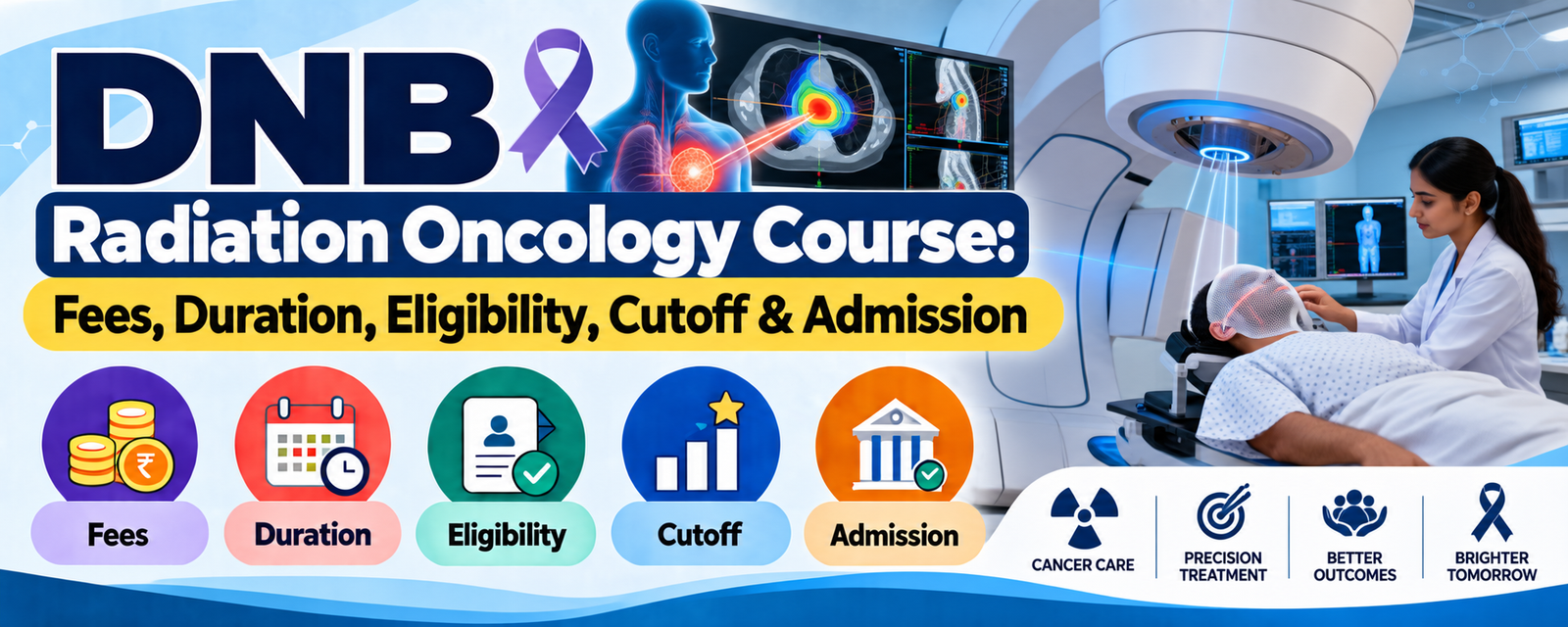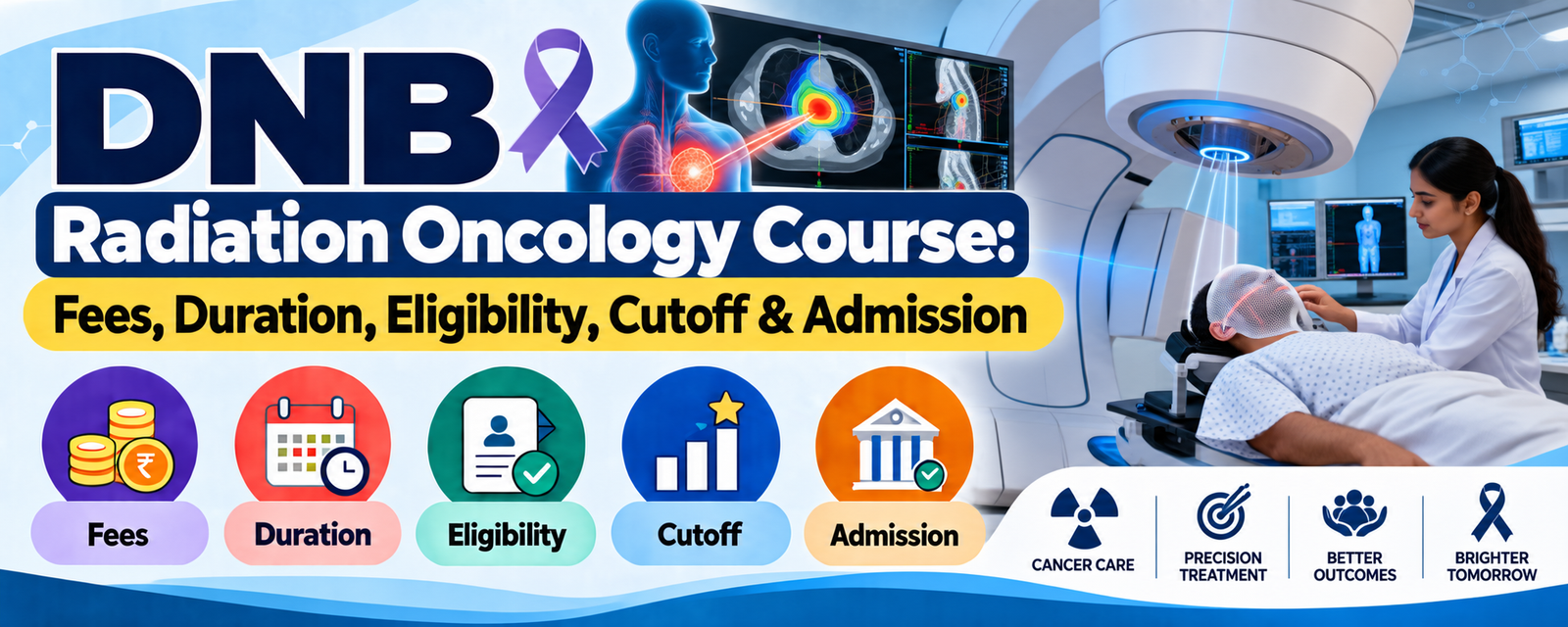
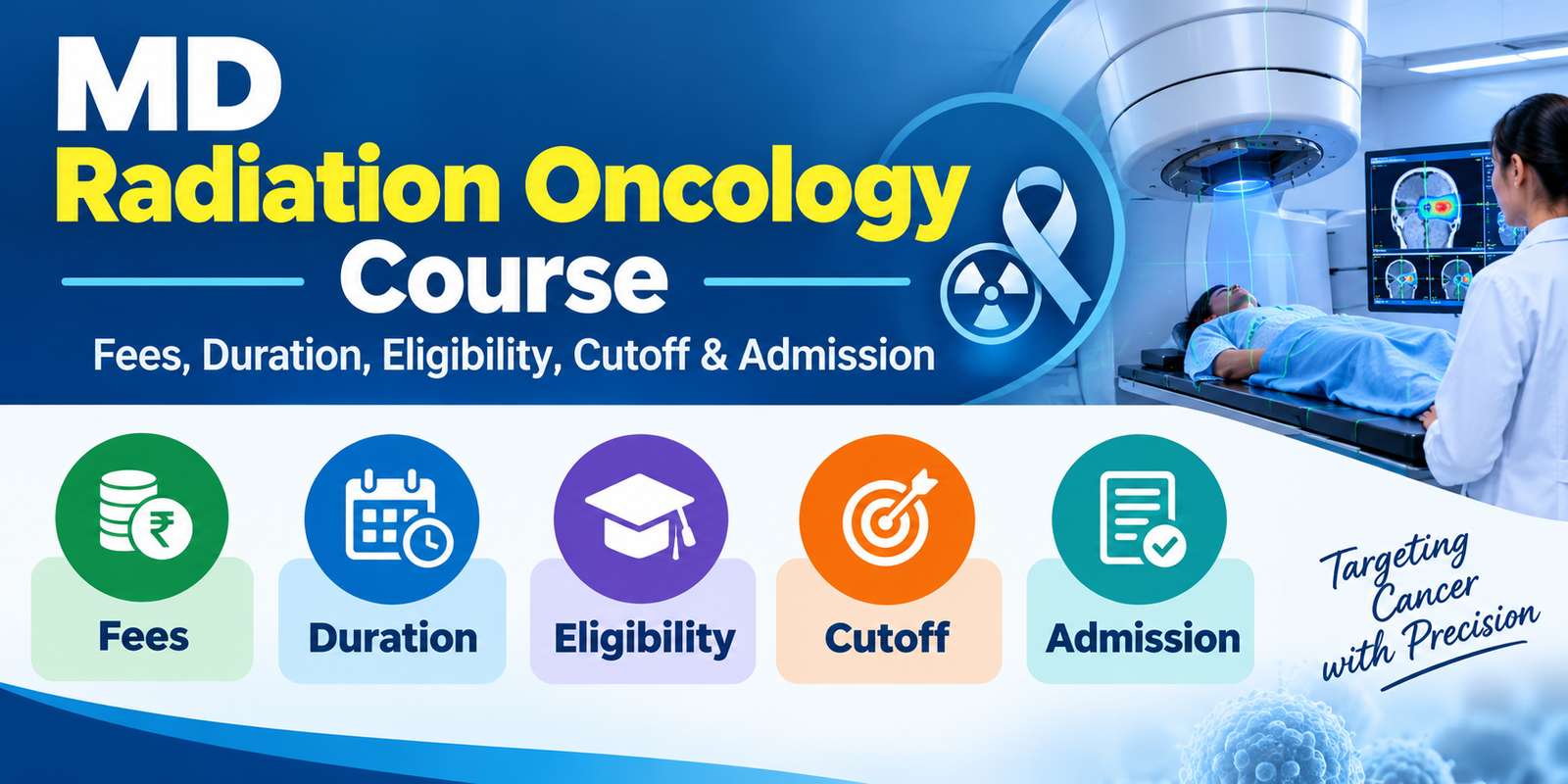
A patient’s cancer treatment may involve surgery, medicines, radiation, or a combination of these. MD Radiation Oncology trains doctors to plan and deliver the radiation part of that care, while looking after the person receiving it.
This course is for MBBS graduates who are interested in cancer medicine, patient care, imaging, and treatment planning. Radiation oncologists see patients in clinics, discuss treatment with other cancer specialists, prescribe radiation, monitor side effects, and follow patients after treatment.
That is a substantial step beyond MBBS. A medical graduate learns the basics of cancer care; an MD resident spends sustained time assessing cancers, deciding whether radiation is appropriate, planning it with a specialist team, and responding when treatment becomes difficult for a patient.
Most admissions follow NEET-PG and counselling through the Medical Counselling Committee (MCC) or a state authority. Participating Institutes of National Importance use the separate INI-CET admission route. Seats in a preferred cancer centre can be competitive, and an older closing rank may not reflect the choices available in a new admission cycle.
What is MD Radiation Oncology?
Radiation oncology uses carefully planned radiation to treat cancer. Depending on the case, the aim may be to cure the disease, reduce the risk of its return, control its growth, or relieve symptoms such as pain or bleeding.
The radiation oncologist’s job begins before a machine is switched on. They review the diagnosis and stage, examine the patient, consider other treatment options, discuss likely benefits and harms, and agree on a plan with the wider cancer team. During treatment, they check how the patient is coping and adjust supportive care when needed.
Planning is a team effort. Radiation oncologists work with medical physicists, radiation therapists, nurses, surgeons, medical oncologists, radiologists, and pathologists. The doctor defines the clinical treatment intent and target areas; the team then develops, checks, and delivers the plan through its respective professional roles.
You may also see the specialty called MD Radiotherapy in some official documents or college records. The National Medical Commission’s (NMC) curriculum published under that name places its main emphasis on radiotherapy while requiring knowledge of related cancer treatments and specialties. Always check the exact course name shown in the current seat matrix.
After the MD, doctors may work in cancer centres, teach, or conduct research. Areas for focused work include brachytherapy, treatment of particular cancer sites, paediatric radiation oncology, and palliative radiotherapy. Further training opportunities and eligibility differ between institutions.
Course Highlights
|
Particular |
Details |
|
Course Name |
MD Radiation Oncology; some institutions or documents may use MD Radiotherapy |
|
Degree |
Doctor of Medicine |
|
Level |
Postgraduate medical degree |
|
Duration |
Generally three years |
|
Basic Qualification |
Recognised MBBS qualification, subject to current eligibility rules |
|
Entrance Exam |
Usually NEET-PG; INI-CET for applicable participating institutes |
|
Admission Process |
Entrance result, counselling or institute seat allocation, choice filling, allotment, verification, and joining |
|
Training Type |
Supervised cancer clinics, treatment planning, radiation delivery review, academic work, and research |
|
Major Focus |
Safe, appropriate radiation treatment and continuing patient care |
|
Further Study |
Eligible fellowships or focused training in cancer-site and radiation techniques |
|
Career Areas |
Cancer hospitals, radiotherapy departments, medical colleges, and research centres |
Course details note: Confirm the exact course title, duration, approved seats, and admission route in the current official prospectus and seat matrix.
MD Radiation Oncology Duration: Year by Year
The standard MD course generally takes three years after MBBS. Residents build clinical judgment alongside technical knowledge; knowing how a treatment machine works is useful, but knowing which patient should receive which treatment is the harder skill.
Each college arranges its postings and assessments differently. The progression below describes what training commonly looks like.
Duration note: Verify the current course structure and training requirements with the institution and applicable NMC guidance.
Year 1: Learn the patient pathway
Residents begin with oncology history-taking, examination, cancer staging, and the principles of radiation biology and physics. They learn why radiation can damage a tumour, why nearby healthy tissue matters, and how a treatment decision fits with surgery or systemic medicines.
In clinic, a junior resident may see a patient from the first consultation through planning and treatment review, under close supervision. This makes an important point clear early: the scan and the treatment plan belong to a person who may be frightened, unwell, or travelling far for care.
Academic work usually includes case discussions, seminars, journal reading, and planning a dissertation or thesis project.
Year 2: Move into treatment planning
Residents become more involved in deciding treatment intent and discussing cases with the multidisciplinary team. They learn to interpret relevant imaging, identify areas requiring treatment, understand dose planning, and consider how to protect normal tissues.
Depending on the department, they may encounter external beam radiotherapy, brachytherapy, and different cancer-site clinics. They also learn to manage side effects during treatment, from skin reactions and swallowing difficulties to fatigue and other site-specific problems.
Research progresses from a proposal to data collection and analysis. A busy treatment department provides many questions worth studying, but residents must learn which can be answered properly with the time and data available.
Year 3: Manage complexity
Senior residents generally take more responsibility for presenting cases, explaining plans, reviewing patients during treatment, and recognising when a plan needs senior reassessment. They continue to work within supervised clinical and safety processes.
Complex cases may involve previous radiation, sensitive nearby organs, a patient whose condition changes mid-course, or treatment given chiefly for symptom relief. Residents complete their research and prepare for their final examinations while developing the judgment needed to handle such decisions.
MD Radiation Oncology Eligibility Criteria
- Base degree: Applicants generally need a recognised MBBS degree or accepted provisional MBBS qualification. Candidates who studied outside India must check the additional conditions relevant to their qualification.
- Internship: The compulsory rotating internship must be completed by the deadline specified for the examination and admission session.
- Registration: Candidates generally require the provisional or permanent medical registration stated in the applicable entrance and counselling rules.
- Entrance examination: NEET-PG is the usual route for colleges in its admission system. Participating Institutes of National Importance use INI-CET for their applicable postgraduate seats.
- Qualifying requirements: Applicants must meet the examination’s qualifying conditions and the rules for their category, quota, documents, and chosen institution. Meeting the qualifying requirement permits consideration under applicable rules; it does not guarantee allotment.
Check the current NBEMS information bulletin or INI-CET prospectus, as appropriate, along with the counselling notice. The internship deadline and document requirements for your admission session are what count.
MD Radiation Oncology Admission Process
Step 1: Complete MBBS and internship
Finish both within the prescribed eligibility dates. Keep degree or provisional certificates, internship proof, medical registration, identity documents, and applicable category documents ready.
Step 2: Take the relevant entrance examination
Apply for NEET-PG for seats admitted through that route. If your target is a participating Institute of National Importance, check its INI-CET prospectus and whether the specialty is offered in the current session.
Step 3: Review the result
Check your official result and qualifying status. Then look for the current seat matrix under Radiation Oncology and, where applicable, Radiotherapy. Do not assume that every cancer hospital or medical college offers an MD seat in the subject.
Step 4: Register for counselling
MCC handles specified NEET-PG categories, including All India Quota and deemed university seats. State authorities conduct counselling for eligible seats under their systems; participating institutes use their INI-CET seat allocation process.
Step 5: Fill choices
Options may include government, state government, private, and deemed medical colleges, depending on the live seat matrix and your eligibility. Rank them in the order you would genuinely want to join.
Look beyond the college name. Ask whether the department has active cancer-site clinics, external beam facilities, brachytherapy exposure where relevant, regular multidisciplinary meetings, good supervision, and a workable research environment.
Step 6: Check seat allotment
Read the instructions for your allotment round carefully. Acceptance, upgrades, deposits, and withdrawal consequences depend on the authority and round.
Step 7: Report and join
Present the required original documents at the allotted institution and complete admission within the official reporting period.
Admission note: Confirm current seats, counselling charges, round rules, and deadlines on the official examination, MCC, state authority, or institute portal.
MD Radiation Oncology Fees
There is no single fixed fee for MD Radiation Oncology in India. Tuition depends on the institution and seat category, while accommodation, university charges, and other costs affect the final amount.
|
College or seat type |
General fee pattern |
|
Government College |
Tuition is often comparatively lower; university and living expenses can still apply. |
|
State Government College |
Fees vary by state and institution, as can associated service conditions. |
|
Private College |
Published tuition and additional charges differ across colleges and approved seat categories. |
|
Deemed University |
The institution’s current fee schedule sets out the applicable charges; accommodation may be separate. |
|
Management Quota |
Where an approved category exists, its published fee can differ from other seats. Entrance and counselling rules still apply. |
Request a written breakdown that covers:
- Tuition and any policy on later revisions
- University registration and examination fees
- Hostel and mess charges
- Security or caution deposits
- Other compulsory institutional charges
- Stipend, refund, bond, and exit terms
For this specialty, cost is only one part of the comparison. A department’s treatment facilities and patient exposure are central to training. Check both before making a choice.
Fee disclaimer: Verify the latest approved fee schedule and written stipend, deposit, bond, and refund terms with the college and relevant authority before paying.
MD Radiation Oncology Cutoff
“Cutoff” can refer to two different stages. The qualifying cutoff is the entrance examination requirement for consideration under the applicable rules. A college closing score or rank describes the last candidate allotted a particular seat.
The latter changes by college, category, quota, and counselling round. An All India Quota closing rank at one institution cannot be used as the cutoff for a state seat elsewhere.
What Determines the Cutoff?
- Seat count: Availability in a department affects how many candidates can join.
- College reputation: Supervision, cancer care facilities, and clinical exposure influence preferences.
- Government or private status: Fees and working conditions can change demand.
- Category: Applicable reservation and eligibility rules affect the candidate pool.
- Quota: All India, state, institutional, and other approved seats follow different conditions.
- Round: Vacancies, upgrades, and withdrawals can alter the closing position.
- Year-to-year competition: Candidate performance, seats, and preference patterns change.
Cutoff disclaimer: Use current official qualifying notices and round-wise allotment results. Earlier closing ranks are useful context, not a promise of admission.
What Rank or Score Is Needed for MD Radiation Oncology?
No universal NEET-PG or INI-CET rank secures an MD Radiation Oncology seat. The sensible question is narrower: which colleges and seat categories could be available to me in this counselling process?
First, check the current seat matrix for the correct exam route and course name. Then compare earlier official allotments for the same institution, specialty, category, quota, and round. An online figure without those details may tell you very little.
Build a broad preference list of departments you would actually consider joining. Include preferred centres and reasonable alternatives, but review each department’s facilities, supervision, total cost, location, and bond conditions before locking choices.
Rank and score disclaimer: Verify live seats, qualifying rules, and allotment results through official portals. Past data cannot predict an individual allotment with certainty.
MD Radiation Oncology Syllabus
The syllabus brings together cancer medicine, radiation science, treatment planning, and patient care. NMC’s radiation oncology curriculum guidance also expects knowledge of related fields, including pathology, surgery, and systemic cancer treatment.
Cancer biology and clinical oncology
- How cancers develop, grow, and spread
- Diagnosis, staging, prognosis, and treatment intent
- Pathology and imaging relevant to treatment decisions
- The roles of surgery, systemic therapy, and supportive care
Radiation physics and biology
- Types of radiation and their effects on tissue
- Principles of dose, fractionation, and normal tissue response
- Treatment equipment and the basics of quality assurance
- Radiation protection for patients, staff, and the public
Treatment planning and techniques
- Simulation and interpretation of planning images
- Defining targets and organs that need protection
- External beam treatment principles and plan evaluation
- Brachytherapy principles and indications
Cancer-site management
- Head and neck, breast, lung, and gastrointestinal cancers
- Gynaecological and genitourinary cancers
- Brain tumours, lymphomas, and other relevant conditions
- Differences between curative and symptom-relieving treatment
Supportive care and research
- Managing treatment side effects and treatment interruptions
- Communication, consent, and follow-up
- Palliative care and symptom control
- Research methods, ethics, critical appraisal, and dissertation work
Radiation safety is part of clinical practice, not just an examination topic. India’s Atomic Energy Regulatory Board (AERB) regulates radiotherapy facilities and sets requirements for their operation. Residents learn within their institution’s approved safety and quality processes.
Practical Training in MD Radiation Oncology
Residents see patients before, during, and after treatment. They learn to assess whether radiation is suitable, explain what a course of treatment involves, obtain appropriate consent, review symptoms during treatment, and arrange follow-up.
Planning work is more technical. Under supervision, residents learn how imaging informs the target area, how nearby organs affect a plan, and how the team checks that a proposed treatment can be delivered safely. They work alongside physicists and radiation therapists, whose expertise is essential to the process.
Clinical exposure also means discussing cases in multidisciplinary meetings. A patient may need surgery first, medicines alongside radiation, or a different approach because of their overall health. Those discussions teach residents to see radiation as one part of cancer care.
The available equipment and case mix vary between colleges. Before choosing a department, ask what facilities are operational, which treatments residents observe or participate in, and how often they receive supervised feedback.
Career Scope After MD Radiation Oncology
- Cancer centre practice: Assess patients, prescribe radiation treatment, review them during therapy, and provide follow-up care.
- Hospital oncology services: Work with surgeons, medical oncologists, pathologists, and other specialists on combined treatment plans.
- Teaching: Train medical students and residents in a medical college, subject to current recruitment requirements.
- Research: Study treatment outcomes, side effects, planning approaches, or ways to improve access and care.
- Further focused training: Pursue eligible fellowships or advanced experience in particular cancer sites or radiation techniques.
This specialty suits doctors comfortable with both patient conversations and detailed technical decisions. They need to explain a difficult diagnosis plainly, then pay close attention to the details of a treatment plan.
Salary After MD Radiation Oncology
Pay varies widely after MD Radiation Oncology. A government hospital appointment, medical college post, private cancer centre role, and independent consulting arrangement can have very different terms.
Employer type, city, sector, experience, duties, and access to specialised facilities all influence earnings. When comparing jobs, consider working hours, benefits, clinical support, and opportunities to keep developing skills alongside the stated pay.
Residency stipend arrangements also depend on the institution and applicable rules.
Salary disclaimer: Verify current stipend notices and written job offers with the college or employer. Figures quoted for another role, centre, or year may not reflect your terms.